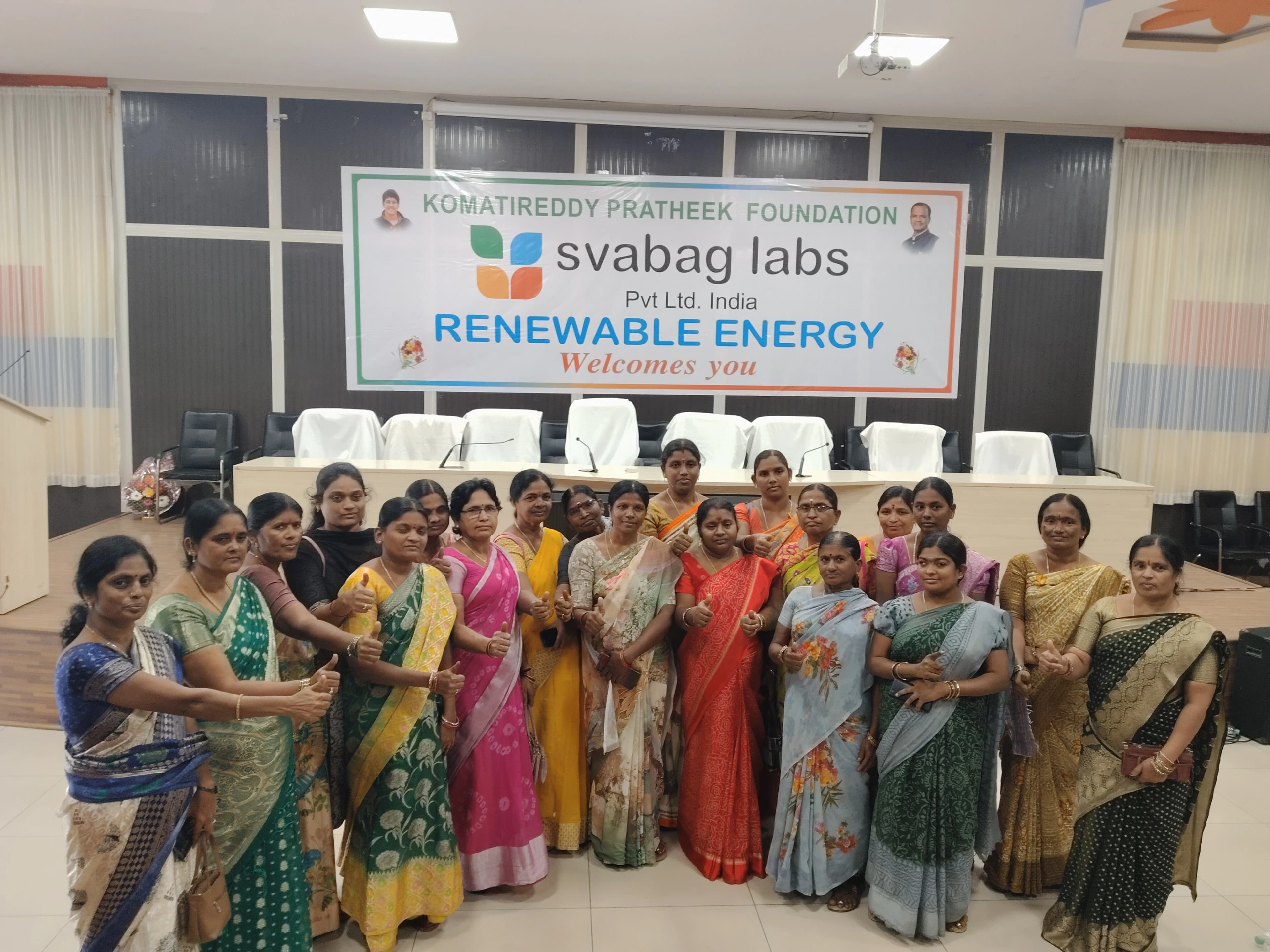
Renewable Energy
What is Community-Centric Renewable Energy?
Learn how community-centric renewable energy empowers villages, businesses, and individuals through decentralized clean energy solutions.
10 min readRead More →

Clean Energy
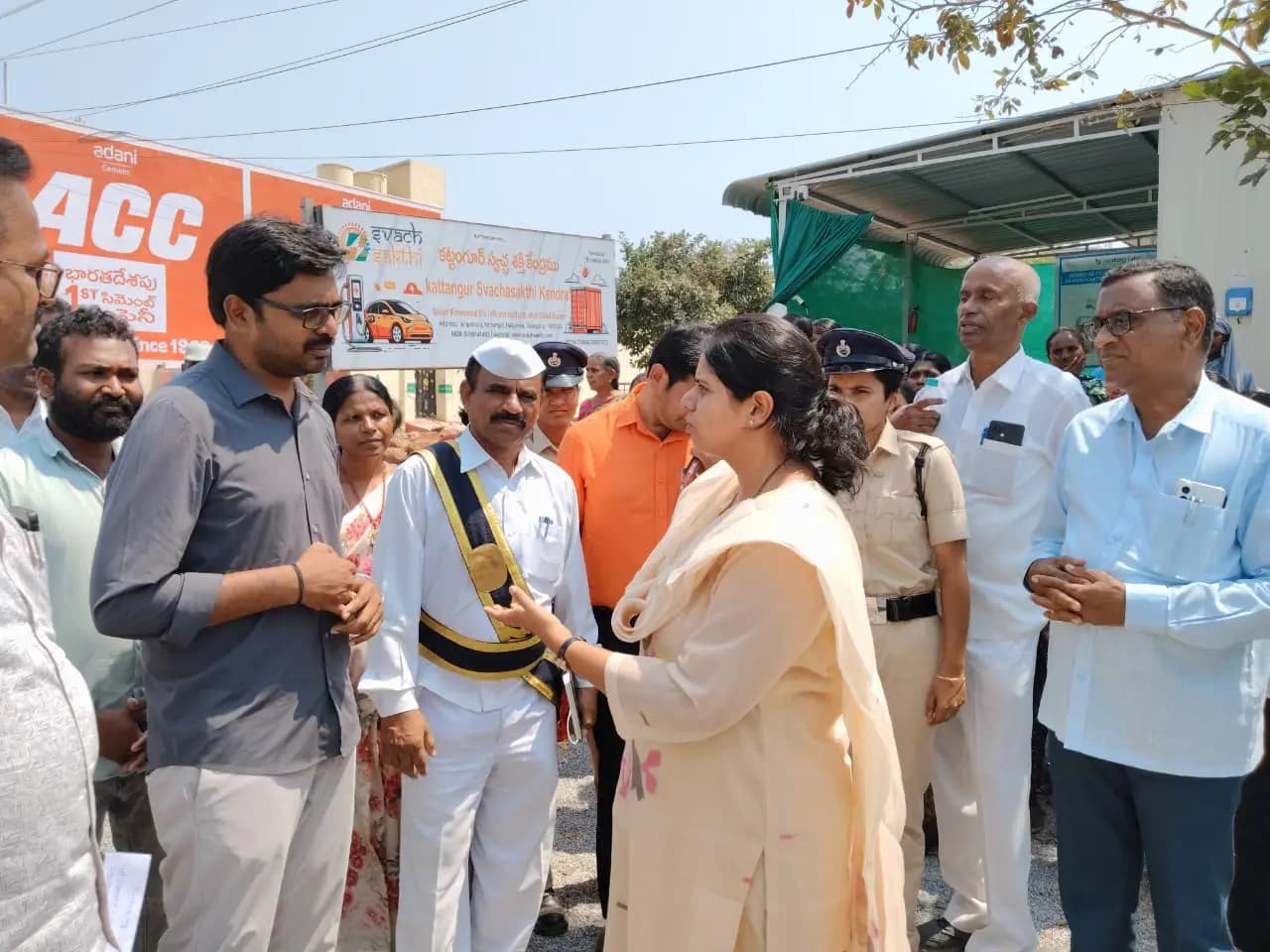
Traditional energy systems often depend on centralized power generation and long-distance transmission. Decentralized energy solutions offer a more flexible approach by generating and managing power closer to where it is consumed — and for large parts of rural India, that shift isn't just a nice-to-have, it's the difference between reliable power and no power at all.
Centralized grids were designed for a different era, when a small number of large power plants could economically serve wide areas through an extensive transmission network. That model works reasonably well in dense urban centers, but it strains badly at the edges — in the villages, farms, and small towns furthest from the generating source. Transmission losses increase with distance, infrastructure maintenance becomes more expensive per household served, and outages take longer to reach and resolve. For millions of rural households, this has meant living with an energy system that was never really designed with them as the primary customer.
Decentralized energy solutions invert this logic entirely. Instead of one large plant serving a wide, thin network, power is generated in smaller amounts across many local points — rooftop solar, community solar arrays, small battery banks — and consumed largely where it's produced. What can't be used immediately is stored locally and distributed through community-scale infrastructure rather than a national grid. The result is a system that's inherently more resilient: a fault in one part of the network doesn't take down power for an entire region, and communities aren't dependent on infrastructure decisions made far outside their control.
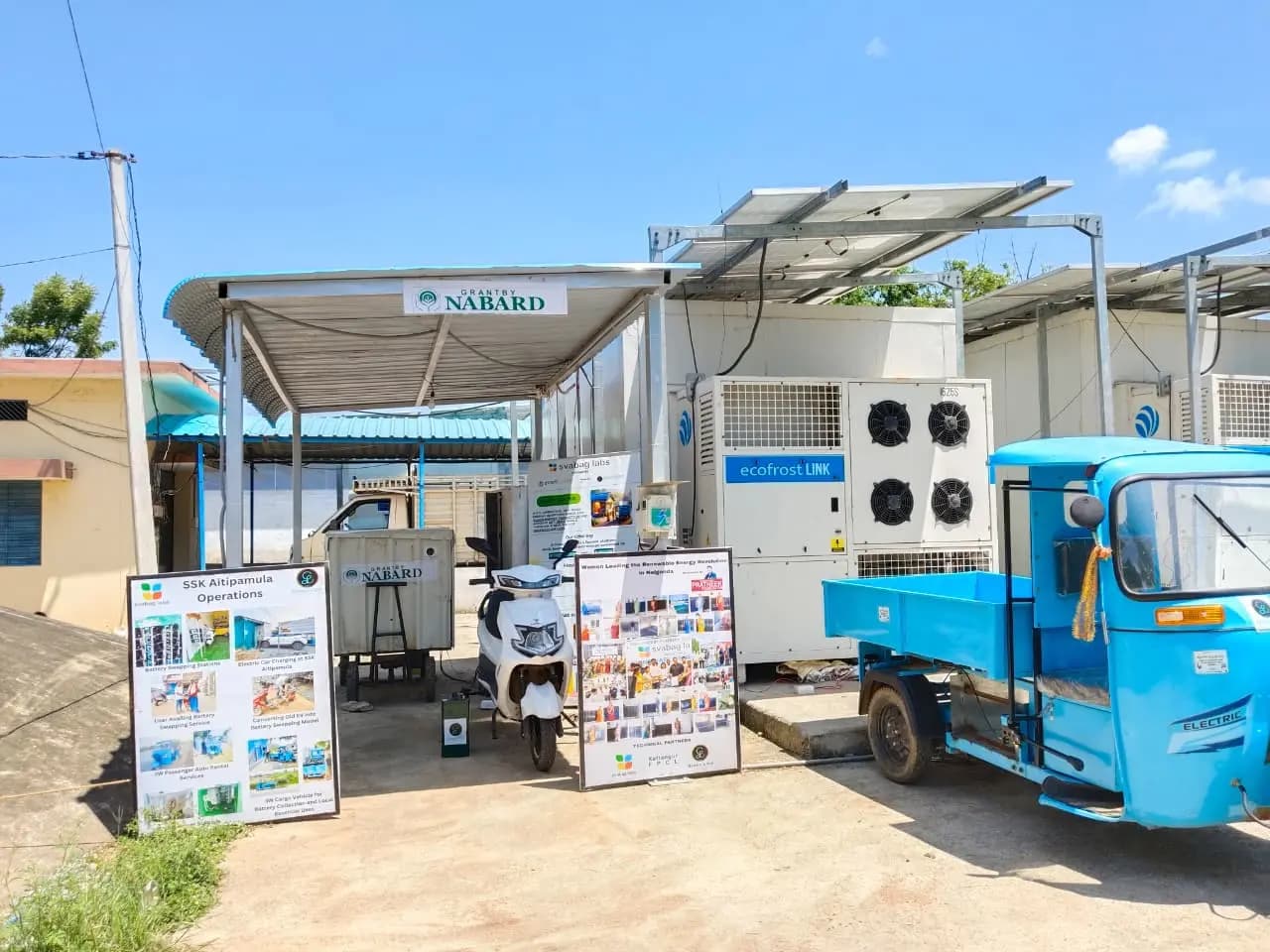
This is the foundation of the ecosystem SvachSakthi and Svabag Labs have built across rural Telangana and beyond, connecting renewable energy generation, battery storage, and battery-swapping networks through a single technology platform. Rooftop solar installations feed surplus energy into smart battery packs. Those batteries move through a network of Svach Kendras — local distribution and swap points — to power homes, run cold storage, and swap into electric two- and three-wheelers. Every part of that chain, from generation to final use, happens within or close to the community it serves.
One of the most important shifts decentralized energy enables is turning consumers into producers. In a centralized system, a rural household has no real path to participating in the energy economy beyond paying a bill. In a decentralized, community-owned model, that same household can generate surplus solar power and earn income from it by feeding it into the local network — creating a direct financial incentive for more clean energy adoption, rather than relying solely on subsidies or top-down mandates. This is the incentivization model at the heart of our approach: passive income for rooftop solar owners, funded by the value their surplus energy creates for e-mobility users and other consumers in the same community.
Decentralization also makes clean mobility genuinely practical in areas where dedicated EV charging infrastructure would be difficult to justify economically. A battery-swapping network built on decentralized generation and storage doesn't need each swap station connected to heavy grid infrastructure — it needs a reliable local supply of charged batteries, which the community itself is generating. This is what makes a two-minute battery swap for a two- or three-wheeler possible in a village that might otherwise have no fast-charging infrastructure at all.
The economic ripple effects extend into local employment as well. Every swap station, distribution point, and battery management hub needs people to run it — creating skilled and semi-skilled jobs directly within the community, rather than exporting that opportunity to a distant utility or manufacturer. Scaling this model to new towns and regions, as we're doing through a franchise-style network of grassroots entrepreneurs, multiplies this effect: each new location isn't just a new customer base, it's a new source of local livelihoods.
None of this has been a straight line. Convincing early partners and social incubators to back a model that hadn't been tried before took persistence — it was ultimately a connection with a Farmer Producer Company in Telangana, facilitated through the Selco Foundation, that gave us our first real pilot ground. That early proof point has since expanded into a growing network of villages across Telangana and Jharkhand, each one demonstrating that decentralized, community-owned energy isn't just theoretically more resilient — it works in practice, at the scale rural India actually needs.
As India continues its push toward its renewable energy and net-zero targets, decentralized systems will play an increasingly central role — not as a replacement for large-scale renewable infrastructure, but as the layer that finally brings its benefits to communities the centralized grid has struggled to serve. Generation, storage, and distribution built close to the people who need it: that's not just a more efficient way to deliver clean energy, it's the model that makes clean energy access genuinely universal.
Learn how community-centric renewable energy empowers villages, businesses, and individuals through decentralized clean energy solutions.
Learn how advanced energy storage solutions are helping communities and businesses maximize renewable energy usage and build reliable clean energy systems.